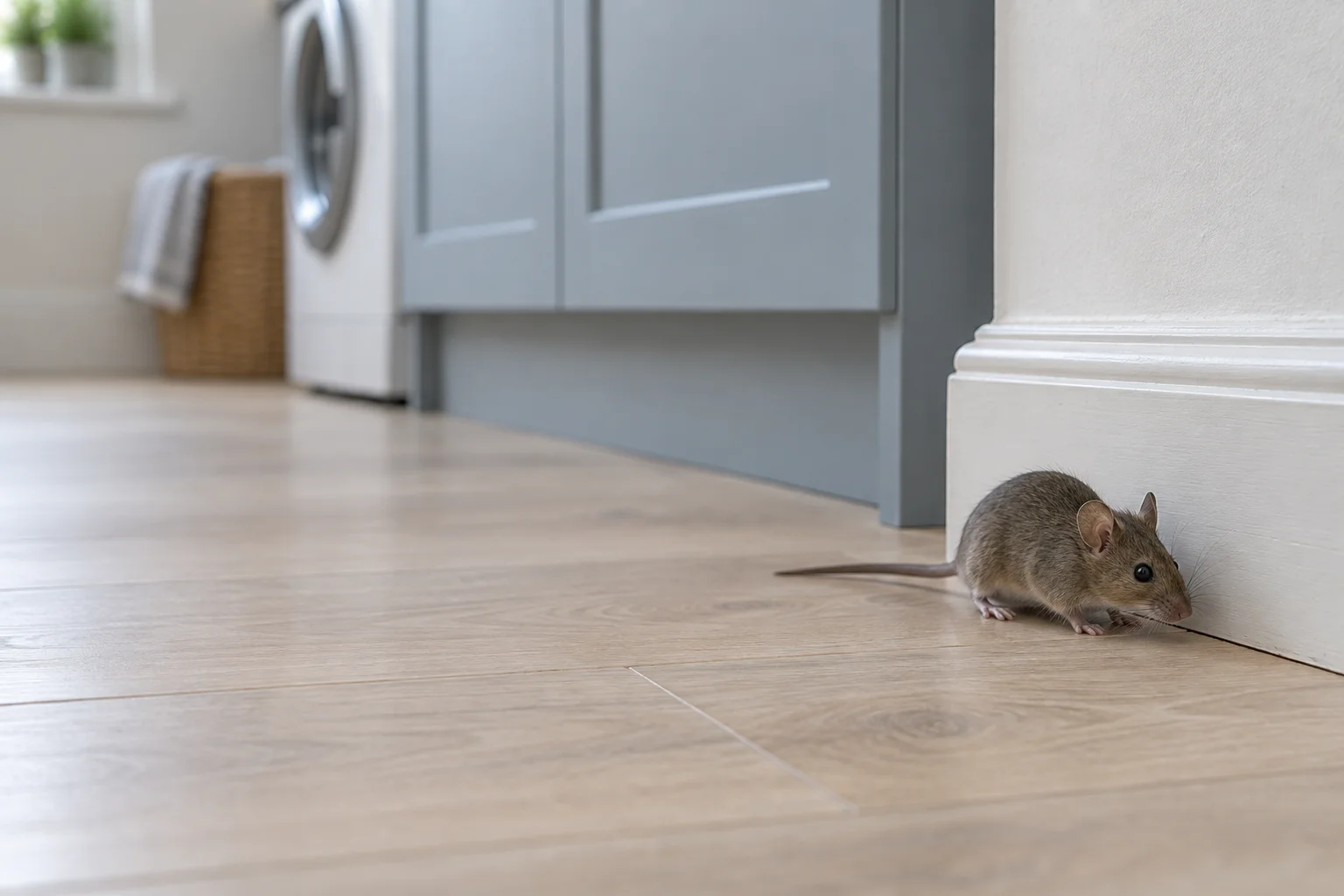
Make a note before you investigate
Write down where the sound is loudest, when it happens and whether it repeats. Scratching at night can fit rodent activity, but timing and loudness are not reliable identification. Rats, mice and squirrels can use roof spaces; birds or bats may also be present. Watch from ground level for animals entering the roof.
Look for evidence you can reach
If you have safe, boarded access, use a torch to look for droppings, gnawed materials and disturbed insulation near accessible edges. Photograph the signs rather than handling them. Do not step onto unsupported ceiling areas or reach into a nest. If access is awkward, a pest controller can inspect and identify the animal for you.
Confirm rats or mice before choosing treatment
Our droppings guide helps compare likely rodent signs. If you suspect bats or nesting birds, get wildlife advice before disturbing the area or closing an opening. Rodent traps and poison are not a solution for an unidentified noise. Establishing what is there saves buying the wrong equipment.
For confirmed rodents, think about checks and recovery
Suitable snap traps can be a practical choice on reachable routes: you can check them daily and recover the catch. Choose the correct rat or mouse trap and compatible box. With poison, rats or mice may die in an inaccessible roof or wall space, causing an unpleasant smell and making removal difficult. Accessible traps give you a practical way to find and remove the catch. If the activity is beyond safe reach, arrange an inspection.
Fix the route after the animals are cleared
Ask a roofer or pest controller to check damaged roof edges, vents and other likely entry points. Do not seal an active opening and trap animals inside. Complete the appropriate proofing once clearance is confirmed, preserve roof ventilation, and keep a simple record of any returning sounds or fresh signs.