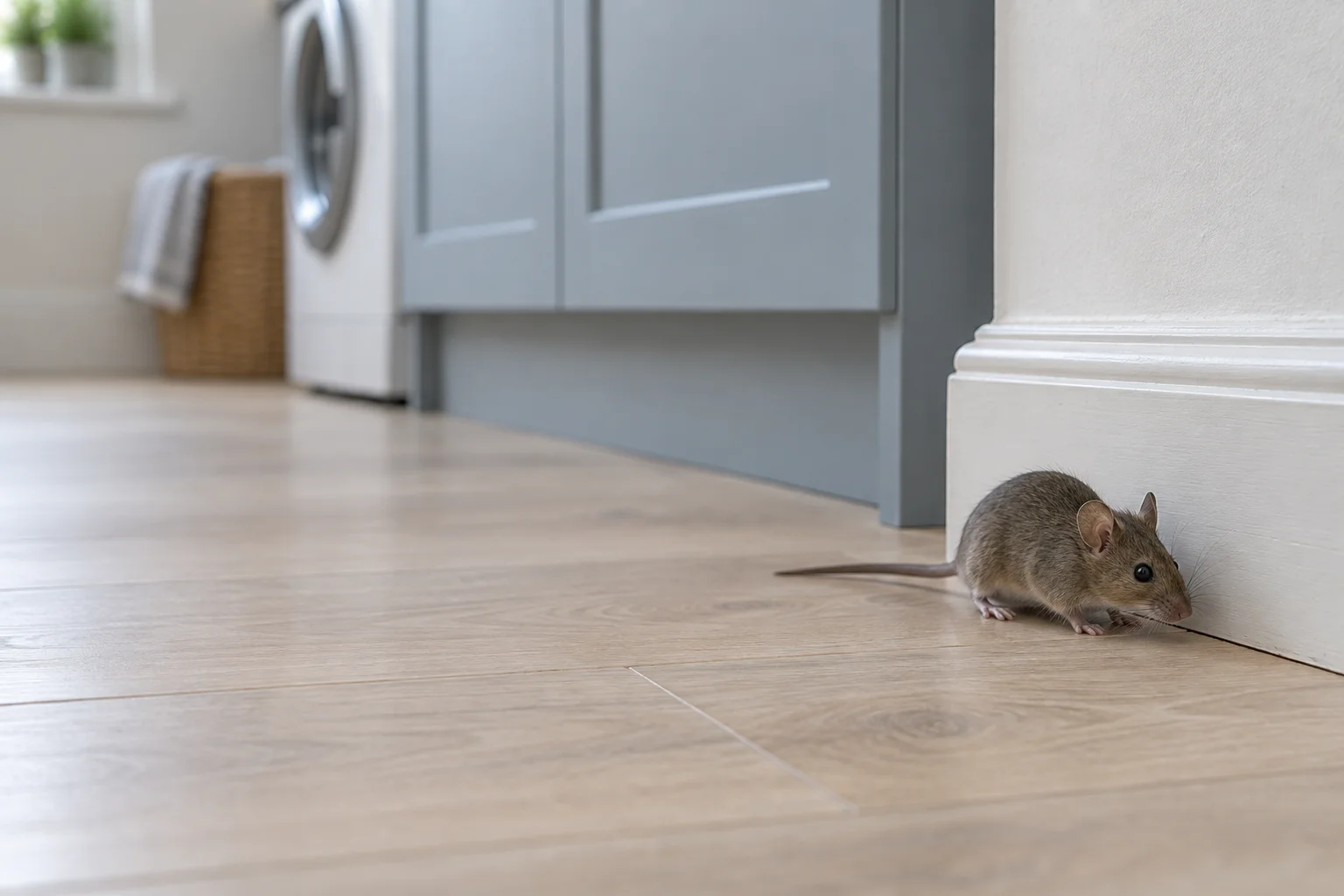
Check the room, then the adjoining spaces
Use a torch around cupboard corners, kitchen kickboards you can easily remove, the sides of appliances and pipe openings under the sink. Look for droppings, damaged packets and rub marks. Note the places with new signs and compare the droppings before deciding whether you need rat or mouse equipment.
Take easy meals off the menu
Move dry food and pet food into sturdy containers with fitted lids. Clear crumbs and spills, clean accessible spaces beneath units, and put pet food away when it is not being eaten. Check neighbouring cupboards too. This gives your control setup a better chance of being noticed and helps reveal fresh damage.
Choose a method you can manage indoors
For a confirmed rodent problem, suitable snap traps are a practical first option where you can check them daily and remove catches. A compatible lockable box encloses the trap mechanism, helping prevent children and pets from reaching it. Position the setup on an active route away from food preparation surfaces, secure it as instructed and keep it locked between checks.
When should you consider poison?
Consider a labelled amateur bait when trapping is unsuitable or a well-positioned setup has not resolved the problem. Check that the label covers indoor use and the species. Poison is not instant, and a rat or mouse may die behind a wall or under a floor, causing an unpleasant smell where the body is difficult to reach. Accessible traps let you find and remove the catch. If activity is in an inaccessible cavity, arrange an inspection before choosing treatment.
Find the route that brings them back
Check external doors, service-pipe gaps and damaged air bricks. Repeated rat activity can point to a drainage defect worth investigating. Plan proofing alongside control, without sealing animals inside. Record new droppings and catches; once activity is resolved, finish the repairs and remove treatment equipment as instructed.