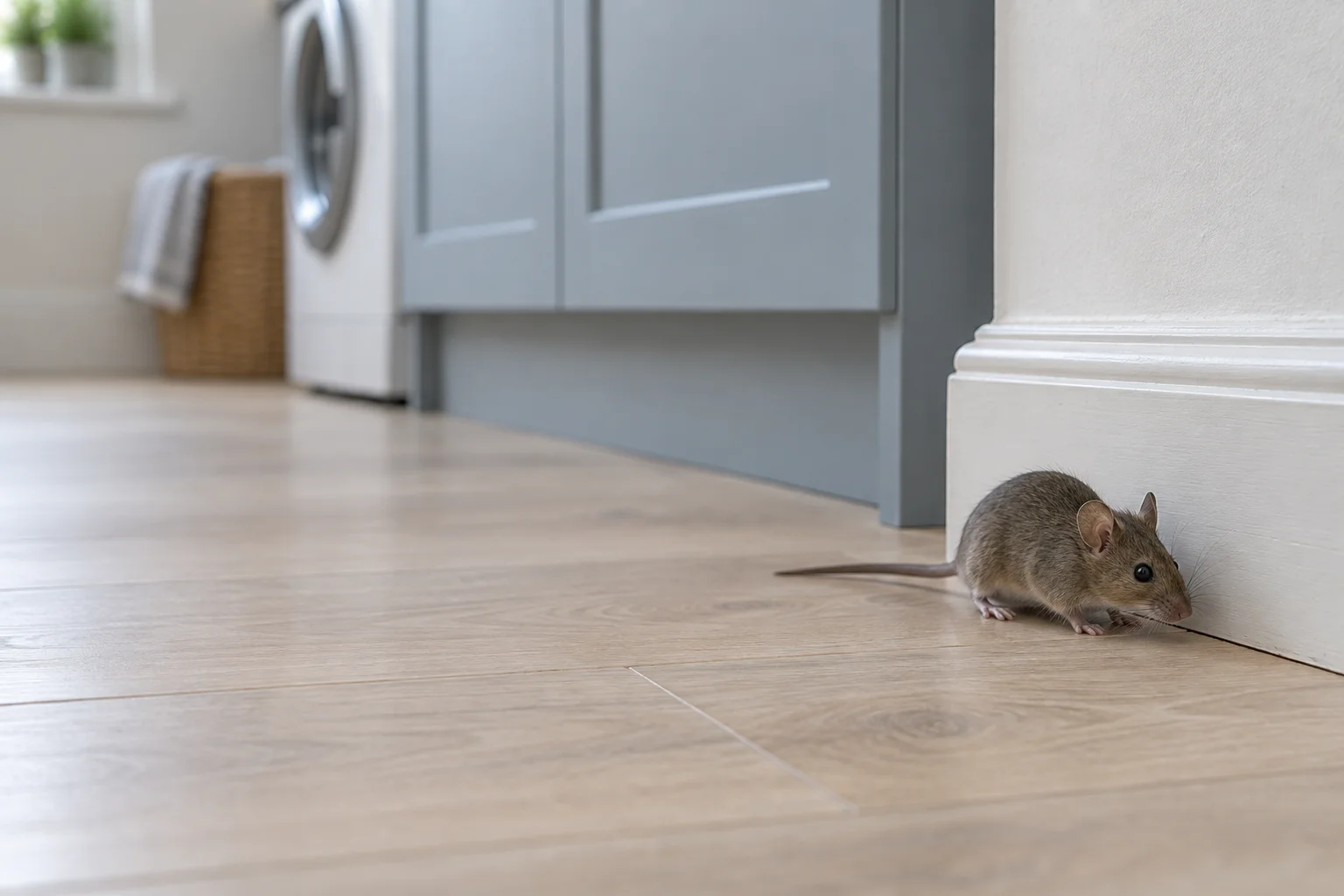
Mouse droppings: small and narrow
Mouse droppings are typically around 3–7 mm long: small, narrow pellets, often tapered or spindle-shaped. You may find them scattered along shelves, room edges or feeding areas. Look under the sink, beside food packets and behind stored items. A photo with a ruler nearby gives you a useful comparison without handling them.
Brown-rat droppings: larger and thicker
Common brown-rat droppings are usually around 10–20 mm long and more substantial than mouse droppings, often oval or capsule-shaped. They may appear in groups or along regular routes. These are approximate clues, not a certain identification: young rats, diet and other animals can make appearances overlap.
Check for a second clue
Look nearby for nibbled packaging, gnawed edges, dark rub marks around gaps or a clear sighting. The room matters too: record whether signs are in the kitchen, loft, garage or shed. If the evidence is only in a roof space, use our loft guide before treating; other animals may be responsible.
Work out whether activity is continuing
Photograph and note the first find. For a small accessible patch, wear gloves and use a damp method to lift droppings; do not dry-sweep or vacuum them. Clean the affected surface appropriately, then look for new signs. Get help with extensive contamination or areas you cannot reach safely. New droppings are more useful evidence than guessing age from colour alone.
Turn the clue into a plan
With rats or mice confirmed, choose a setup for that location. Accessible routes are useful places to consider suitable traps, because you can check and remove catches. Compare poison if trapping is unsuitable or unsuccessful. Follow the signs back towards doors, pipes and other gaps, then use the proofing guide to plan lasting repairs.