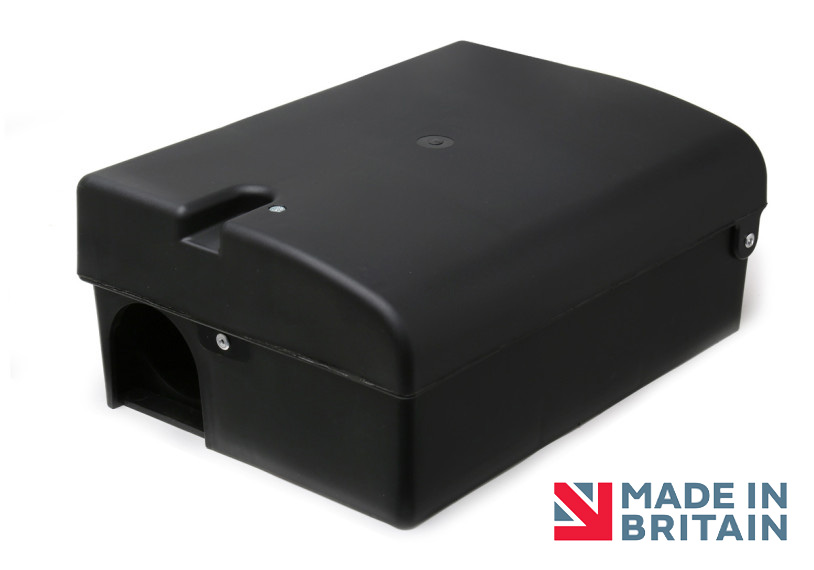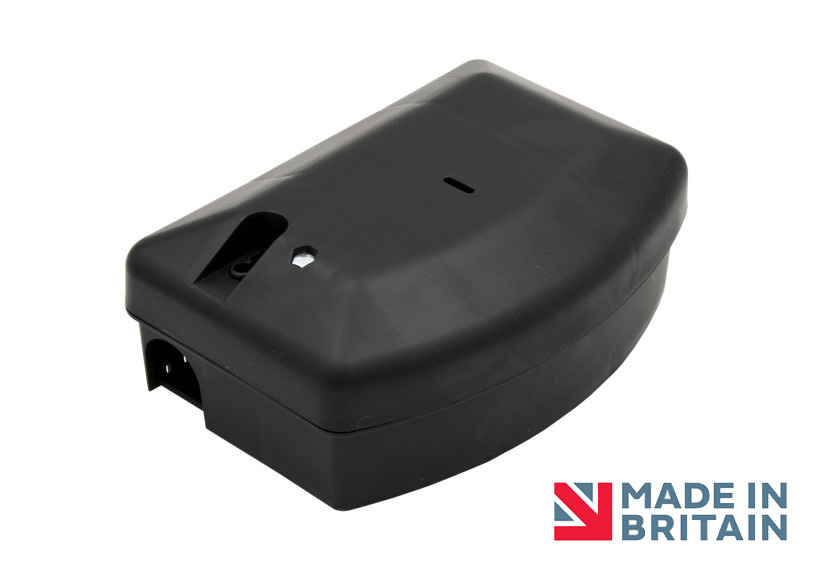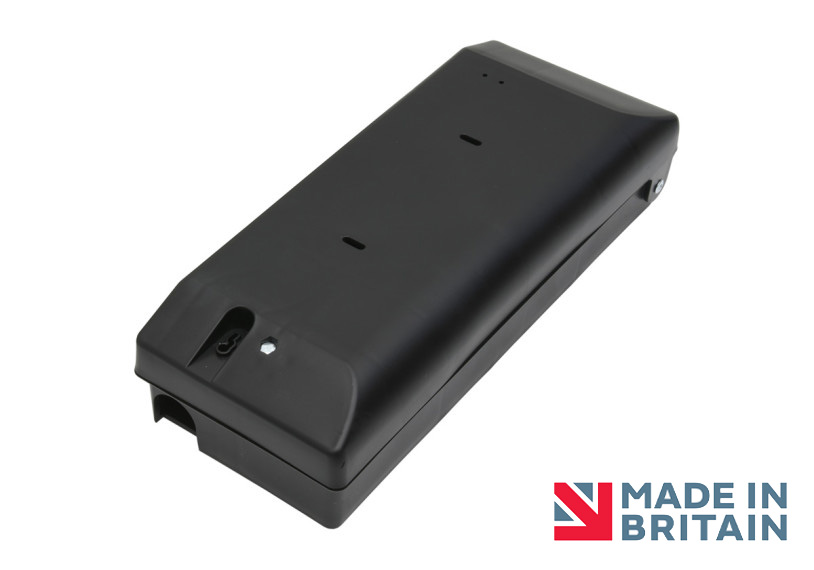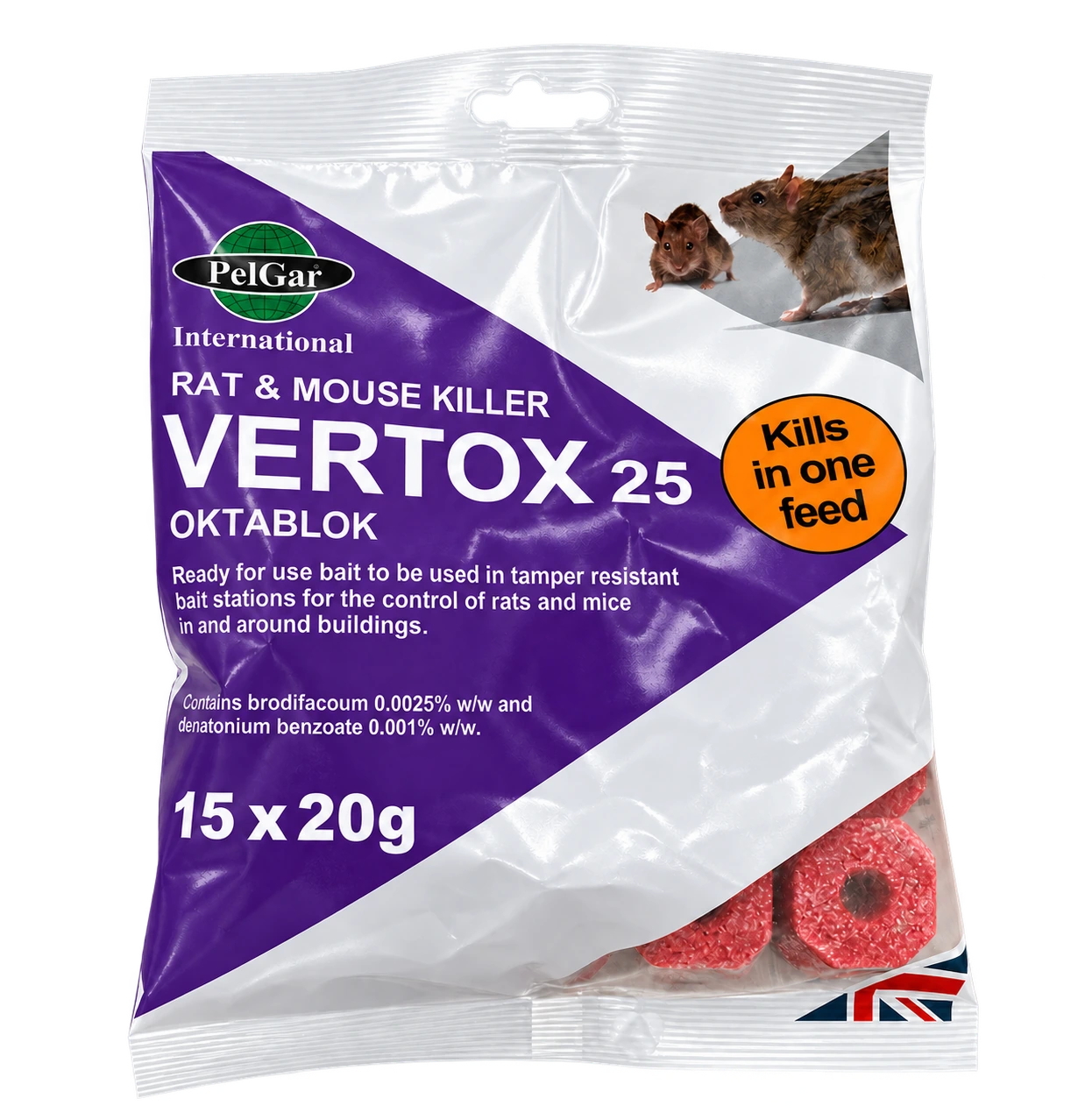
Take control of rats and mice with ready-to-use, single-feed bait blocks. A practical 300g bag gives you 15 individual blocks to load, secure and check inside your bait stations.
Rats: indoors and around buildings.
Mice: indoors only.
Use only in tamper-resistant bait stations.
Bait stations are required separately.
Count. Secure. Place.
No mixing and no loose grain to measure. These solid 20g blocks make it easy to follow the label quantities, hold the bait in position and monitor feeding during treatment.
Single-feed formulation
A rodent can consume a lethal dose in one sufficient feed. The delayed action allows time for bait to be eaten; continue the checking and replenishment schedule throughout treatment.
Made to encourage feeding
A cereal-based bait combining wheat flour, chopped wheat and other food ingredients, with a chocolate-like aroma to encourage bait uptake.
Secure, easy-to-place blocks
The central hole lets you thread each block onto a compatible bait-station rod, holding it in place for feeding and inspection.
No mixing or weighing
Ready-to-use 20g blocks make it straightforward to count out the label quantity and see how much bait has been taken.
Wax-bound bait
Hot-cast blocks tolerate humid conditions. Their solid format makes them practical to load, check and replenish inside a suitable bait station.
For general public use
The 25ppm retail formulation is labelled for use by the general public against brown rats and house mice, in the locations shown below.
15 × 20g · 300g total bait
One bag. Fifteen individual blocks.
Your pack contains 15 Vertox 25 Oktablok bait blocks, with brodifacoum at 0.0025% w/w (25ppm). Each block has a central fixing hole for a compatible bait-station rod. Bait stations and accessories are not included.
The right amount, in the right place.
Choose the target pest and infestation level below. These quantities, spacing and inspection intervals follow the product label.
Rats
Indoors & around buildings
2–3 blocks per station · 40–60g
| Infestation | Station spacing |
|---|---|
| Low | Every 10 metres |
| High | Every 5 metres |
First check: after 5–7 days. Then inspect at least weekly.
Mice
Indoors only
1 block per station · 20g
| Infestation | Station spacing |
|---|---|
| Low | Every 5 metres |
| High | Every 2 metres |
Initial checks: every 2–3 days. Then inspect at least weekly.
How far does a bag go?One initial fill for 5 rat stations at 3 blocks each, or 7 rat stations at 2 blocks each with 1 block left over, or 15 mouse stations at 1 block each. Allow for replenishment during treatment.
From first placement to final removal.
Identify the active areas.
Look for droppings, gnawing and rodent runs near nesting or feeding areas. Consider non-chemical options such as traps before using rodenticide. Read the full pack label and plan your station positions.
Remove competing food.
Clear readily available food, including spilled grain and food waste. Apart from this, avoid cleaning or disturbing the infested area just before treatment, as this can make rodents less willing to accept the bait.
Load and secure the stations.
Use 2–3 blocks per rat station or 1 block per mouse station. Where a station has a metal bait rod, thread the blocks onto it to minimise direct contact. Close and secure the station and apply the label information described in the safety section.
Position close to rodent activity.
Place stations beside areas where activity has been observed, following the spacing above. Fix them to the ground or another structure where possible. Keep the bait protected inside the station; follow the location and access precautions below.
Check, replenish and record progress.
For rats, make the first visit after 5–7 days; for mice, check every 2–3 days initially. Then check at least weekly. Inspect bait uptake and station condition, refill when necessary and replace water-damaged or dirty bait. Search for and remove dead rodents at each inspection.
Finish treatment and prevent a return.
Remove remaining bait or the bait stations at the end of treatment. Dispose of bait, packaging and dead rodents as directed on the label. Improve food storage and block entry points. Do not use the bait permanently to prevent infestations or monitor activity.
4–10 days after consumption
Single-feed bait with a delayed action.
A rodent can consume a lethal dose in one sufficient feed. The label states that anticoagulant rodenticides may take 4–10 days to be effective after consumption. This is the action time after feeding, not a promise to clear an infestation in that period.
Keep the instructions to hand.
Download the complete product-label text, with clear baiting quantities, checking intervals, safety information and storage and disposal instructions.
Download product label ↓Product specifications.
The 300g bag shown above.
| Brand | Vertox by PelGar International |
|---|---|
| Product | Vertox 25 Oktablok Rat & Mouse Killer |
| Pack contents | 1 × 300g bag; 15 × 20g blocks |
| Formulation | Ready-to-use wax-bound rodenticide blocks |
| Active ingredient | Brodifacoum 0.0025% w/w (25ppm) |
| Bittering agent | Denatonium benzoate 0.001% w/w; bait also contains a dye |
| Target pests | Brown rat (Rattus norvegicus) and house mouse (Mus musculus) |
| Use locations | Rats: indoors and around buildings. Mice: indoors only. |
| Application | Only in tamper-resistant bait stations |
| User category | General public |
| Authorisation on pack | GB/NI-2016-0997-0001; IE/BPA 70505 |
Before you get started.
What does “kills in one feed” mean?
A rodent can eat a lethal dose in one sufficient feed. This does not mean every nibble is enough, an instant result or a single visit to treat an infestation. The label gives a delayed action of 4–10 days after consumption. Keep checking and replenishing stations as directed.
Can I use Vertox 25 Oktablok outside?
For rats, use indoors and around buildings. For mice, use indoors only. In both cases the bait must be enclosed in tamper-resistant bait stations. Outdoor mouse treatment and loose baiting are not uses on this pack label.
Do I need a bait station, and is one included?
Yes, a tamper-resistant bait station is required. This product contains one 300g bag of 15 bait blocks only; a station is required separately. Choose a suitable lockable or sealable station and secure the blocks on its bait rod where provided.
Do I need to mix, break up or weigh the blocks?
No mixing or weighing is needed. Use the ready-to-use 20g blocks as supplied: one block per mouse station or two to three blocks per rat station, following the spacing for the infestation level.
How much bait will one bag provide?
The bag contains 15 blocks. That is enough for an initial fill of five rat stations at three blocks each, seven rat stations at two blocks each with one block remaining, or fifteen mouse stations at one block each. Allow additional bait for replenishment during treatment.
Is it safe for pets?
The bait is not pet-safe. Keep the pack and bait stations out of reach of pets and other non-target animals, and remove dead rodents during treatment. The bittering agent does not make the bait safe to eat. See the essential safety information below for handling and incident advice.
Can I leave it down throughout the year?
No. The label prohibits permanent anticoagulant baiting to prevent infestations or detect rodent activity. Remove remaining bait or bait stations when treatment ends.
What if rodents are still active?
Review station placement, bait uptake and access to other food. The label states that treatment should eliminate rodents within 35 days. If activity is still present at the end of treatment, or you suspect a lack of efficacy, seek advice from the product supplier or a pest control service.
Use, handle and store responsibly.
Use biocides safely. Always read the label and product information before use.
Warning: may cause damage to organs (blood) through prolonged or repeated exposure if swallowed. Contains 1,2-benzisothiazolin-3-one and 2-octyl-2H-isothiazol-3-one; may produce an allergic reaction. Hazardous to wildlife.
Protect children, pets and wildlife
- Keep bait and stations out of reach of children, birds, pets, farm animals and other non-target animals. The bittering agent does not make the bait pet-safe.
- Use strong, tamper-resistant stations that are lockable or sealable, resist access or damage by children and dogs, and withstand the conditions where they are placed.
- Keep away from food, drink, animal feed, utensils and food-contact surfaces. Avoid sites liable to flood and drainage systems where bait may contact water.
Handling & station labelling
- Avoid contact with eyes, skin and clothing. Do not eat, drink or smoke during use. Wash hands and exposed skin afterwards.
- Label each station as directed on the pack: “do not move or open”, “contains a rodenticide”, the product name or authorisation number, the active substance and incident contact information.
- Do not place loose bait on floors, in open trays or directly in burrows. No permanent preventive or monitoring baiting.
Storage & disposal
- Store locked up in the closed original packaging, in a dry, cool, well-ventilated place away from direct sunlight and inaccessible to children and animals.
- At the end of treatment, remove remaining bait or bait stations. Follow the pack and local requirements for disposing of unused bait and packaging.
- Search for dead rodents at each inspection. Use gloves or tools such as tongs; do not handle them with bare hands. Double-bag for disposal as directed on the label and prevent access by wildlife or pets.
If exposure or ingestion occurs
If swallowed, obtain medical advice immediately and show the product container or label. Do not induce vomiting. If a pet swallows bait, contact a vet immediately.
For skin exposure, wash with water and then soap and water. For eye exposure, rinse with eye-rinse liquid or water, keeping the eyes open for at least 10 minutes. The full medical advice appears in the downloadable product label.